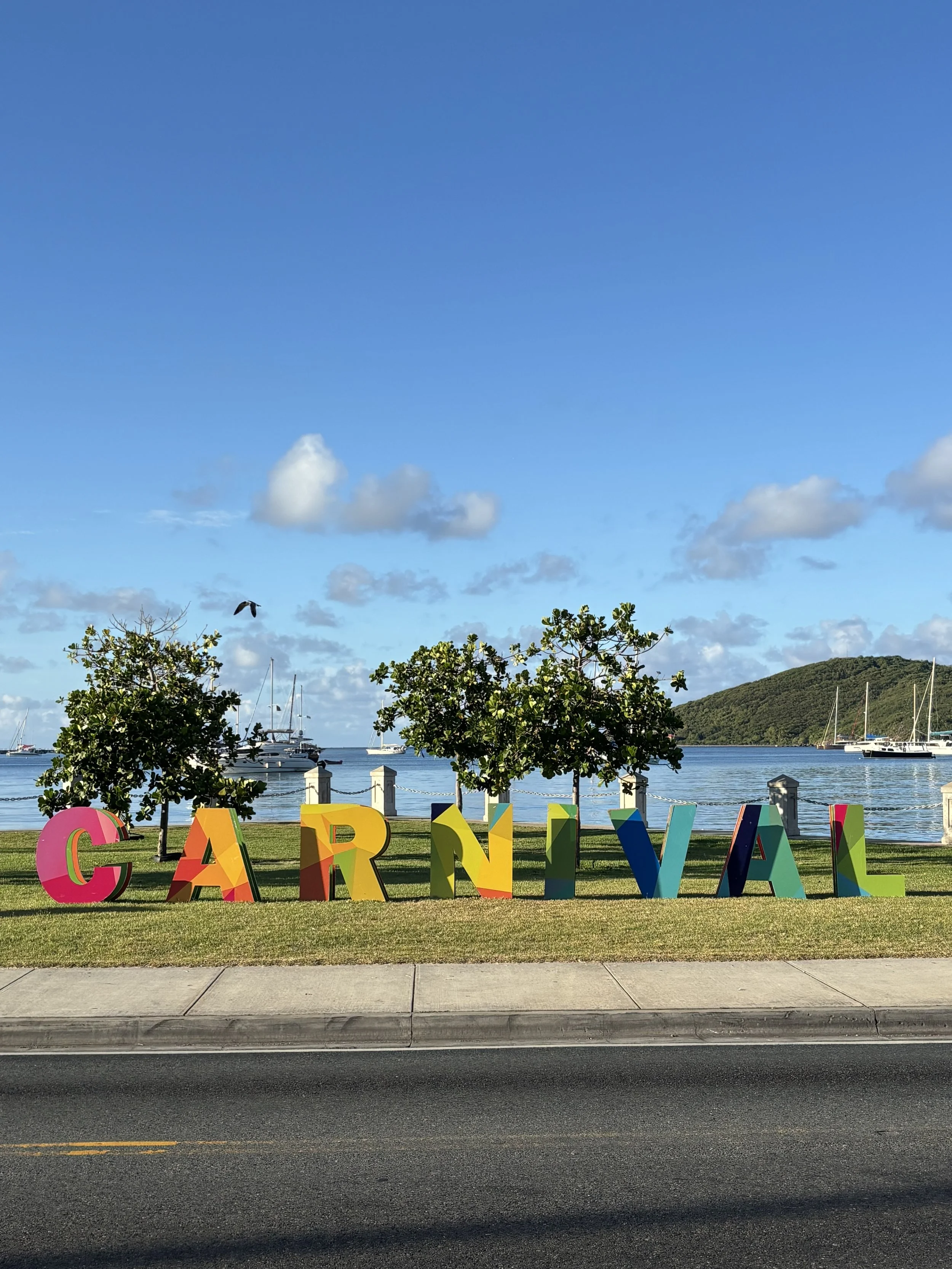
CULTURAL CAPITAL
By Charles W. Hamilton, Esq.
I'm from St. Thomas, U.S. Virgin Islands. I grew up on music that everybody somehow knew: classic reggae, the soca that arrived new with each Carnival season, whatever was on the radio and in the road at J'ouvert. Songs recited word for word by people who'd never bought a record. For all their cultural power, these recordings made little for the artists behind them or the places they came from — while the live shows paid, the records never did. That's true across much of the Caribbean, a fact I only fully understood as an adult, once I was inside the mainland music business and saw how it turns sound into money, or fails to.
Over two decades, I've represented major labels and indies, music publishers, startups, and investors, along with GRAMMY and Dove Award–winning artists and songwriters I won't name here. The entire time, a cluster of questions kept gnawing at me.
Who owns the value that culture creates, and who should?
How can those owners balance art and commerce with equal intensity?
And how do we ensure that music delivers a return, cultural and financial, to the artists and communities who made it and the investors who fund it?
Those meta questions invite practical ones. When an artist insists on owning her masters, what must she actually do to maximize and collect that income? When an investor buys a label or catalog, how does it manage estate approvals, licenses, collections, and royalty accountings at scale? When a mid-career soca or reggae band sells out arenas but streams mostly in lower-ARPU territories, how do you turn that fan enthusiasm into money? Some of the answers are strategic, some infrastructural, all of them unsexy. But the difference between a catalog that pays and one that doesn't is rarely the music.
I've always been equally fascinated by recording artists and the industry that makes their work possible, and I've spent my career learning this business from as many angles as possible: representing artists, record labels, distributors, and investors. What's invisible from one angle is obvious from the next, and the best opportunities tend to sit between those points of view.
These blind spots exist at every level of the industry, in every genre, from arena headliners to catalogs nobody's audited in years. Small-island music is only the most extreme version of this myopia, where the shortfalls compound — lower ARPU, pro-rata payouts that disadvantage niche catalogs, thin metadata, unclaimed rights — until streaming income becomes a trickle. Maximizing what actually reaches creators and rights holders, whether structurally, tactically, or off-platform, is the job. It's why investors, artists and their reps call me to pressure-test a business thesis worth betting on, and to build the operational discipline that protects the margin.
__________________________________
Current work
AudioVascular Consulting (Founder) — Consultancy for music startups and investors: diligence, deal structure, and turning a catalog or a roster into a business that pays.
Law Office of Charles W. Hamilton (Principal) — High-stakes strategic representation for referred clients. Also home to a passion project: U.S. copyright terminations and renegotiations for artists working in Caribbean music genres. Admitted in California, Michigan, and the U.S. Virgin Islands.
Village Music Group (Board of Directors) — An alt-R&B label that also operates a creative-event and recording campus.
Inquiries
MEDIA: media@charles.vi
BUSINESS: Most of my work comes by referral, and we're probably only two degrees apart already. My LinkedIn page is the shortest path to the person we both know.
LAW OFFICES OF CHARLES W. HAMILTON
449 South Broadway Suite 15 | Los Angeles, CA 90013 | esq@charles.viAUDIOVASCULAR LLC
PO Box 302756 | St Thomas, Virgin Islands 00802 | consulting@charles.vi